03 · Verizon · 2026
Finding traps in a mobile checkout flow
I tested a reskinned mobile checkout with 27 assistive technology users, traced the barriers they hit to four root causes, and turned them into prioritized fixes for engineering.
- Org and Year
- Verizon, 2026
- Role and Team
- Senior IC, UX + Accessibility Research
- Methods
- Assistive technology usability, n=27
- Partners
- Wireless plan sales experience team, design leads and engineering
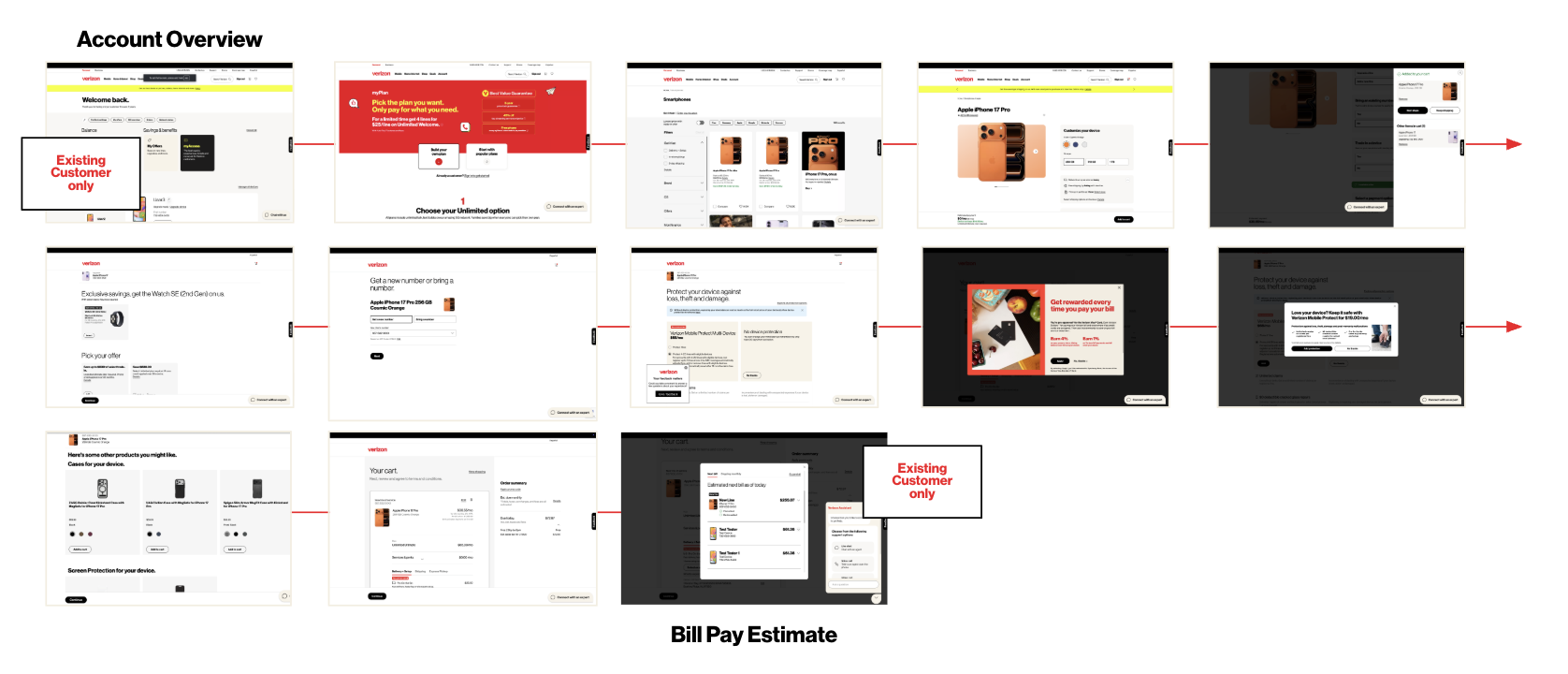
Could people using assistive technology actually buy a phone in the reskinned mobile sales flow?
Context
Verizon's Next Gen Digital mobile sales flow was being reskinned under the new Monarch brand. The study checked whether people using assistive technology could still complete a purchase.
Approach
I designed and ran this study on my own: an unmoderated test with 27 assistive technology users, 10 prospects and 17 existing customers, on desktop and mobile. They included 16 screen reader users, 5 switch and voice control users, and 6 low-vision magnification users, each working through purchase tasks.
Findings
Participants ran into four kinds of barriers:
- Authentication and session handling
- Keyboard focus management in dialogs
- Form controls without accessible labels
- Visual density beyond what participants could comfortably take in
I turned the findings into prioritized fixes for engineering and design, covering session persistence, focus management, programmatic labels and progressive disclosure for dense content.
What changed
Each fix was logged in Jira and prioritized with the wireless plan sales experience team, design leads and engineering, focused on the checkout steps where high-intent customers were dropping out.